
Part 4 of 12 / Truth Without Humility, Power Without Testing: The Anatomy of Spiritual Blindness

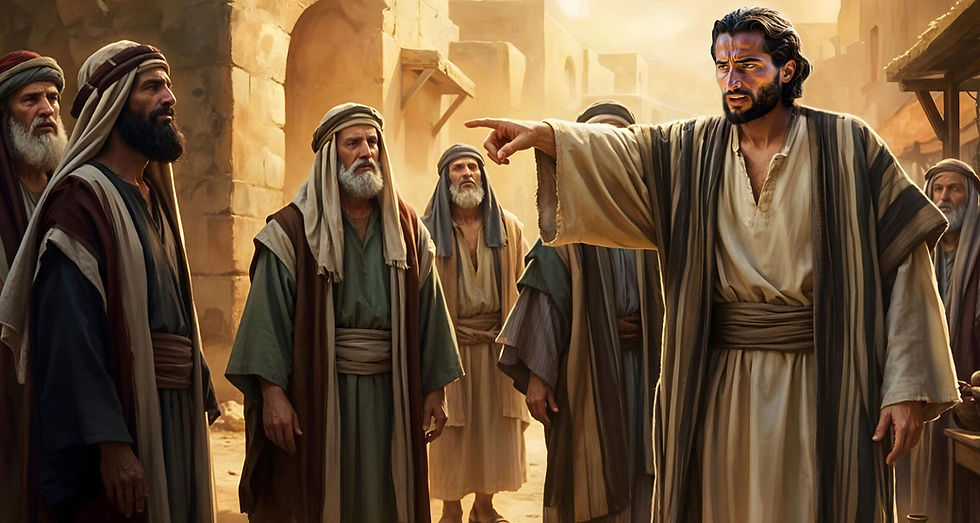
One of the most tragic ironies recorded in Scripture is that the Pharisees, experts in God’s Law, could study, quote, and enforce Scripture with remarkable precision while failing to recognize the Messiah standing directly before them. Their physical sight was intact, yet their spiritual perception was profoundly impaired. Jesus repeatedly confronted this blindness, exposing how pride, tradition, and self-exaltation hardened their hearts and prevented them from discerning God’s work.
“Woe to you, blind guides, who say, ‘Whoever swears by the temple, that is nothing; but whoever swears by the gold of the temple is obligated.’ You fools and blind men! Which is more important, the gold or the temple that sanctified the gold?" - Matthew 23:16-17
Spiritual blindness is not merely a deficiency of information or theological training. It is a condition of the heart, an inability or unwillingness to perceive God’s truth because of self-interest, attachment to human systems, or moral superiority. In this lesson, we will examine how Pharisaical blindness developed, why it persisted despite overwhelming evidence of God’s activity, how similar patterns appear within the modern church, and what is required to cultivate humility and spiritual discernment.
Historical and Cultural Context
The Pharisees’ blindness was deeply shaped by their religious training and cultural environment. They devoted their lives to the careful study of the Torah, the Prophets, and the oral traditions that surrounded them. Their knowledge of Scripture was extensive and exacting, yet over time that knowledge became a shield against transformation rather than a pathway to it. Their familiarity with God’s commands enabled them to critique others while excusing themselves from the deeper demands of justice, mercy, and repentance.
“But woe to you Pharisees! For you pay tithes of mint, rue, and every kind of garden herb, and yet you ignore justice and the love of God; but these are the things you should have done without neglecting the others." - Luke 11:42
Jesus directly confronted this contradiction by exposing their flawed spiritual vision. He referred to them as blind guides, highlighting their ability to parse ceremonial details while missing the purpose and heart of God’s Law. When He rebuked them for valuing the gold of the temple over the temple itself, He revealed how their priorities were inverted, elevating symbols and systems above God’s presence. Their blindness did not stem from ignorance, but from misplaced devotion.
“Woe to you, blind guides, who say, ‘Whoever swears by the temple, that is nothing; but whoever swears by the gold of the temple is obligated.’" - Matthew 23:16
This context reveals a sobering truth: familiarity with Scripture, religious participation, and theological precision do not guarantee spiritual insight. When knowledge is disconnected from humility and obedience, it can actually reinforce blindness. Jesus made clear that true obedience flows from spiritual perception, not merely from intellectual mastery of religious texts.
The Roots Of Spiritual Blindness
At the heart of Pharisaical blindness was pride and self-righteousness. Rather than measuring themselves against God’s holiness, the Pharisees compared themselves to others, reinforcing a sense of moral superiority. Jesus illustrated this posture in the parable of the Pharisee and the tax collector, where self-confidence in righteousness blinded one man to his need for mercy.
"Now He also told this parable to some people who trusted in themselves that they were righteous, and viewed others with contempt: “Two men went up into the temple to pray, one a Pharisee and the other a tax collector. The Pharisee stood and began praying this in regard to himself: ‘God, I thank You that I am not like other people: swindlers, crooked, adulterers, or even like this tax collector. I fast twice a week; I pay tithes of all that I get.’ But the tax collector, standing some distance away, was even unwilling to raise his eyes toward heaven, but was beating his chest, saying, ‘God, be merciful to me, the sinner!’ I tell you, this man went to his house justified rather than the other one; for everyone who exalts himself will be humbled, but the one who humbles himself will be exalted.” - Luke 18:9-14
Pride sharpened their ability to condemn while dulling their capacity for repentance.
Their blindness was further reinforced by attachment to tradition and human systems. Devotion to oral law and ritual observance allowed them to maintain an image of holiness while missing the spirit of God’s commands. Jesus rebuked them for clinging to traditions that nullified Scripture, revealing how systems designed to protect faith can ultimately replace it.
"Neglecting the commandment of God, you hold to the tradition of men.” He was also saying to them, “You are experts at setting aside the commandment of God in order to keep your tradition. For Moses said, ‘Honor your father and your mother’; and, ‘The one who speaks evil of father or mother, is certainly to be put to death’; but you say, ‘If a person says to his father or his mother, whatever I have that would help you is Corban (that is, given to God ),’ you no longer allow him to do anything for his father or his mother; thereby invalidating the word of God by your tradition which you have handed down; and you do many things such as that.” - Mark 7:8-13
Legalism compounded this blindness by elevating rules over love, procedure over compassion, and control over mercy. Though they knew the Law, they failed to grasp its central purpose: love for God and love for neighbor (Matthew 22:36–40)
“Teacher, which is the great commandment in the Law?” And He said to him, “ ‘You shall love the Lord your God with all your heart, and with all your soul, and with all your mind.’ This is the great and foremost commandment. The second is like it, ‘You shall love your neighbor as yourself.’ Upon these two commandments hang the whole Law and the Prophets.” - Matthew 22:36-40
Finally, spiritual blindness deepened through resistance to the work of the Holy Spirit. Jesus’ ministry challenged their authority, disrupted their social order, and exposed their hearts. Rather than submitting to conviction, they resisted Him, choosing preservation of status over surrender to truth.
"For this reason therefore the Jews were seeking all the more to kill Him, because He not only was breaking the Sabbath, but also was calling God His own Father, making Himself equal with God. Therefore Jesus answered and was saying to them, “Truly, truly, I say to you, the Son can do nothing of Himself, unless it is something He sees the Father doing; for whatever the Father does, these things the Son also does in the same way." - John 5:18–19
Blindness, in this sense, was not accidental; it was sustained by deliberate resistance.
Jesus’ Confrontation with Spiritual Blindness
Jesus’ encounters with the Pharisees consistently revealed their inability to recognize truth even when confronted with undeniable evidence. In John 9, Jesus healed a man who had been blind from birth, a miracle that unmistakably demonstrated God’s power. Yet instead of rejoicing, the Pharisees interrogated, doubted, and ultimately condemned both the healed man and Jesus Himself. Their commitment to doctrinal control prevented them from acknowledging God’s work unfolding before their eyes.
This same blindness is evident in their failure to recognize Jesus as the Messiah. Though Scripture testified about Him and His ministry fulfilled prophetic expectation, the religious leaders rejected Him because He did not align with their assumptions or preserve their authority.
"He was in the world, and the world came into being through Him, and yet the world did not know Him. He came to His own, and His own people did not accept Him." - John 1:10-11
They also repeatedly misread Scripture, focusing on technical Sabbath violations while ignoring mercy and compassion. Jesus corrected this distortion by reminding them that God desires mercy, not sacrifice, and that the Sabbath was meant to serve humanity, not enslave it.
"At that time Jesus went through the grainfields on the Sabbath, and His disciples became hungry and began to pick the heads of grain and eat. Now when the Pharisees saw this, they said to Him, “Look, Your disciples are doing what is not lawful to do on a Sabbath!” But He said to them, “Have you not read what David did when he became hungry, he and his companions, how he entered the house of God, and they ate the consecrated bread, which was not lawful for him to eat nor for those with him, but for the priests alone? Or have you not read in the Law that on the Sabbath the priests in the temple violate the Sabbath, and yet are innocent? But I say to you that something greater than the temple is here. But if you had known what this means: ‘I desire compassion, rather than sacrifice,’ you would not have condemned the innocent. For the Son of Man is Lord of the Sabbath.” - Matthew 12:1–8
These encounters reveal a critical reality: spiritual blindness is often a choice. It is the refusal to see truth when seeing would require repentance, humility, or relinquishing control.
Modern-Day Spiritual Blindness in the Church
The danger of spiritual blindness did not end with the Pharisees. Modern churches can fall into similar patterns when outward success is prioritized over inward faithfulness. Leaders may emphasize programs, attendance, branding, or appearance while neglecting the deeper purposes of God’s Kingdom. Believers may possess biblical knowledge, yet fail to apply Scripture to their hearts, relationships, and ethical decisions.
Tradition, denominational culture, or personal preference can quietly overshadow obedience to the Spirit, especially when maintaining peace or avoiding conflict becomes more important than confronting sin, injustice, or error. Jesus’ warning remains piercingly relevant: when spiritual vision is compromised, darkness spreads beyond individuals and affects entire communities.
"But if your eye is bad, your whole body will be full of darkness. So if the light that is in you is darkness, how great is the darkness!" - Matthew 6:23
Blindness among leaders and congregations alike undermines discipleship, weakens witness, and stalls spiritual growth.

Warnings To The Modern Church
Scripture WARNS that knowledge without discernment is dangerous. Memorization of Scripture, theological education, and faithful attendance cannot substitute for a heart submitted to God. When tradition and cultural norms are elevated above Scripture and love, they harden the heart and foster resistance to the Spirit’s correction. Pride, whether personal or institutional, blinds both leaders and followers by prioritizing comfort, reputation, and authority OVER TRUTH.
Failure to recognize God’s work ultimately leads to stagnation. Churches that misinterpret or ignore the Spirit’s activity risk becoming resistant to renewal, mercy, and obedience. The tragedy of the Pharisees stands as a WARNING for every generation: it is possible to know the Law, defend orthodoxy, and maintain religious structure while missing God Himself. True sight begins NOT with knowledge, but with humility and only the humble are able to see.
Transition | NAR: When Power Becomes Proof
Through The Allure Of Emotional Spirituality

In the last few weeks, we have examined false authority, doctrinal compromise, and deceptive signs and wonders.
This week, we now turn our attention to the power of emotionalism and revivalist methods.
We will examine how the human heart is captivated by the supernatural and that Scripture warns us that not every supernatural manifestation originates from God directly.
We will look at how signs and wonders are treated as the primary validation of spiritual authority when Scripture says otherwise and can easily replace obedience to God’s Word when they are elevated above Scriptureor critical thinking.
The Apostle John provides a sobering warning:
“Beloved, do not believe every spirit, but test the spirits, whether they are of God; because many false prophets have gone out into the world.” – John 4:1
Emotionalism In Contemporary Ministry
Modern ministry often emphasizes feelings and experiences over doctrine and obedience:
Worship Focused On Sensations Rather Than Reverence
Encounter Services Promising Spiritual Highs
Prophetic Words Designed To Elicit Excitement Or Awe
Revivalist Campaigns Prioritizing Response Over Transformation
While such experiences can energize believers, Scripture consistently emphasizes that faithful obedience is superior to transient emotional highs.
“You shall love the Lord your God with all your heart and with all your soul and with all your mind." – Matthew 22:37
Emotionalism becomes dangerous when it drives decisions and loyalty rather than Scripture and truth.
Revivalism Without Discipleship
Historical revivals were often accompanied by deep doctrinal teaching and personal repentance. In contrast, many modern revival movements focus primarily on experience without follow-up.
Mass Evangelism Without Long-Term Discipleship
Emotional Conversions Unaccompanied By Teaching In Holiness or Obedience
Leaders Emphasizing Sensational Manifestations Rather Than Spiritual Maturity
Without grounding in Scripture, revivalism can create surface-level excitement that leaves congregations spiritually shallow and vulnerable to deception.
Emotional Manipulation And Spiritual Authority
Emotionalism is often used intentionally to reinforce allegiance to leaders:
High-Energy Meetings That Glorify Leadership, Yet Claiming It Is God
Prophetic Pronouncements That Induce Fear or Awe
Emotional Pressure To Conform or Give Financially
When emotion is used to replace discernment, believers are susceptible to spiritual abuse, false teaching, and doctrinal compromise. The test of spiritual truth is NOT about how it feels, but whether it aligns with God’s Word and produces Christ-like character.
“They will deceive many by their cunning and by seductive words.” – Romans 16:18
Discernment In The Midst Of Emotionalism
Believers must cultivate practical and spiritual discernment.
1. Anchor in Scripture: regular study provides stability when emotions run high.
2. Evaluate Leaders & Practices: are these experiences Christ-centered and Word-aligned, or primarily leader-focused?
3. Observe Fruit: emotional ministries should produce holiness, service, and obedience – not merely excitement.
4. Encourage Accountability: discuss experiences and teachings with mature believers to avoid deception.
Discernment requires vigilance, humility, and submission to Christ above all else.
“Test all things; hold fast what is good.” – 1 Thessalonians 5:21
The Biblical Purpose Of Signs And Wonders
In Scripture, signs and wonders were never ends themselves. They served a specific, God-ordained purpose: to authenticate divine revelation during KEY redemptive moments.
“The signs of a true Apostle were performed among you with utmost patience, with signs and wonders and mighty works.” – 2 Corinthians 12:12
Miracles In The Bible Did Four Key Things:
Confirmed God’s Messengers.
Pointed People To God’s Word.
Glorified God, Not The Miracle Worker.
Never Replaced Obedience Or Doctrine.
Jesus Himself refused to perform signs on demand or to entertain spectacle-driven faith.
“An evil and adulterous generation seek for a sign . . .” – Matthew 12:39
False Signs In Scripture: A Forgotten Warning
Scripture repeatedly WARNS that false signs and wonders WILL accompany deception, especially in the last days.
“For false christs and false prophets will arise and perform signs and wonders, so as to lead astray, if possible, even the elect.” – Matthew 24
“so as to lead astray, if possible even the elect.” – Matthew 24:24
This warning is NOT hypothetical. Jesus did NOT say deception ‘might’ occur;
He said that IT WILL OCCUR!
The danger of signs and wonders is not that they are weak, but that they can be convincing without being truthful. Supernatural activity alone is not a reliable indicator of divine approval. From the earliest pages of Scripture, God’s people are warned that miraculous power can accompany falsehood. The test was never the miracle. The test was faithfulness to God’s revealed truth.
“If a prophet or a dreamer of dreams arises among you and gives you a sign or a wonder, and the sign or wonder that he tells you comes to pass, and if he says, ‘Let us go after other gods,’ . . . you shall not listen.” – Deuteronomy 13:1-3
Power Without Truth: A Deadly Combination
When signs and wonders are detached from sound doctrine, they become spiritually dangerous.
In many modern movements, miracles are used to:
Validate False Teaching
Silence Biblical Critique
Elevate Personalities
Justify Unbiblical Practices
Create Emotional Dependency
The assumption becomes:
“God is moving here; therefore God must approve of everything happening here.”
Scripture does NOT ALLOW for this logic.
“Not everyone who says to me, ‘Lord, Lord,’ will enter the kingdom of heaven… On that day many will say to me, ‘Lord, Lord, did we not prophesy in your name, and cast out demons in your name, and do many mighty works in your name?’” – Matthew 7:21–22
These individuals did miracles, yes. They used Jesus’ name, yes. Yet they were unknown to Christ because they did it in their own strength for their own recognition, NOT His Kingdom.
The Psychology of Power Encounters
Power encounters create intense emotional environments. Music swells. Crowds respond. Expectations rise. Physical manifestations occur. In such settings, discernment often collapses under the weight of experience.
Believers may feel:
Pressured to “receive”.
Ashamed if nothing happens.
Spiritually inferior without manifestations.
Fearful of questioning leadership.
This atmosphere does NOT foster biblical faith; it fosters spiritual performance.
“For God is not a God of confusion but of peace.” — 1 Corinthians 14:33
The Holy Spirit produces clarity, conviction, and Christ-centered transformation.
NOT chaos or coercion.
Counterfeit Power In The Last Days
The Apostle Paul warns that end-times deception will involve real power, not mere illusion.
“The coming of the lawless one is by the activity of Satan with all power and false signs and wonders.” – 2 Thessalonians 2:9
This is very sobering to Christ. Satan can produce supernatural manifestations that appear convincing, impressive, and spiritually authentic. Power alone does NOT distinguish the work of God from the work of the enemy.
The true test is truth aligned with Scripture.
When Experience Overrides Scripture
One of the most dangerous shifts in modern Christianity is the elevation of experience above exegesis. When someone says, “I know the Bible says this, but I experienced that,” Scripture has already been dethroned.
The Word of God does NOT bend to human experience. Experience must submit to the Word.
“To the law and to the testimony! If they do not speak according to this word, it is because they have no dawn.” – Isaiah 8:20
A Biblical Theology Of God’s Power
God is powerful. He heals. He delivers. He acts according to His sovereign will.
But His power is always:
Subordinate To His Truth
Consistent With His Character
Focused On His Glory
Grounded In His Word
Biblical power leads to repentance, holiness, obedience, and worship, NOT spectacle for its own sake.
Pastoral Warning To The Church
Beloved, do not chase power. Chase Christ.
Do not measure spiritual health by manifestations, but by:
Faithfulness To Scripture
Christlike Character
Repentance & Obedience
Endurance In Sound Doctrine
The Church does NOT need more power encounters. It needs more discernment!
“See that you are not led astray.” — Luke 21:8
Pastoral Guidance
Beloved, emotions are a gift from God, but they cannot replace obedience, Scripture, or sound judgment.
A Christ-centered Church prioritizes:
Teaching Over Sensation
Faithfulness Over Popularity
Obedience Over Thrill
“So, brothers, stand firm and hold to the traditions that you were taught, whether by word or by our epistle.” – 2 Thessalonians 2:15
It is the Church’s responsibility to guide, correct, and nurture believers to love God fully, NOT merely to experience Him superficially.
Application
Where in my life might I be relying on knowledge of Scripture rather than obedience to it?
Have I confused religious activity with spiritual growth?
Do I find it easier to identify sin in others than to confront it in myself?
Where has pride subtly shaped my spiritual life?
Is there any area where I resist correction because it threatens my reputation or comfort?
Are there traditions I defend simply because they are familiar?
Have I ever elevated cultural preference above biblical command?
What practices in my church life might appear spiritual but lack love or mercy?
Do I prioritize structure and order over compassion and justice?
If Jesus confronted my priorities, what might He call “inverted” or misplaced?
When was the last time I genuinely repented — not just felt regret?
Do I pray like the Pharisee (self-assured) or like the tax collector (dependent on mercy)?
How do I respond when Scripture exposes something uncomfortable in my life?
What would deeper humility look like in my leadership, family, or ministry?
Am I willing to lose status or approval in order to follow truth?
Have I ever allowed experience to override clear biblical teaching?
Do I measure spiritual maturity by feelings or by obedience?
Am I drawn more to sensational experiences than to steady discipleship?
Would I still pursue Christ if there were no dramatic manifestations?
When something feels powerful, do I automatically assume it is from God?
Do I regularly test teachings and spiritual experiences against Scripture?
Am I willing to question respected leaders if their practices conflict with the Word?
What safeguards do I have in place to protect myself from deception?
Who in my life has permission to challenge my spiritual conclusions?
Do I seek accountability or avoid it?
Do I seek spiritual experiences for God’s glory or personal validation?
Have I ever felt pressured to “perform spiritually”?
Do I equate visible manifestations with spiritual authority?
Am I more impressed by power or by Christlike character?
If signs and wonders ceased tomorrow, would my faith remain stable?
Is our church culture centered more on transformation or on experience?
Do we prioritize discipleship as much as moments of response?
How do we evaluate spiritual fruit over time?
Are we cultivating discernment intentionally?
Would outsiders describe our church as reverent and grounded, or emotionally driven?
What is one area where I sense the Holy Spirit correcting me?
What is one concrete step I can take this week to grow in humility?
What habit can I implement to strengthen biblical discernment?
What truth from this study challenged me the most?
Am I chasing Christ — or chasing what feels powerful?
Summary Part 4 of 12
In Week 4, we examined the sobering reality of spiritual blindness and the modern danger of elevating power and experience above biblical truth. Using the Pharisees as the primary biblical example, the study highlights how individuals deeply trained in Scripture can still fail to recognize God’s work when pride, tradition, and self-righteousness harden the heart. Though the Pharisees meticulously observed religious laws, they neglected justice, mercy, and love. Jesus exposed their misplaced priorities—valuing symbols over substance and tradition over obedience—demonstrating that spiritual blindness is not an intellectual deficiency but a moral and spiritual condition rooted in pride and resistance to humility.
The study then transitions to contemporary parallels within the church, warning that religious activity, theological knowledge, and outward success do not guarantee spiritual discernment. Just as the Pharisees defended systems while missing the Messiah, modern believers and leaders can defend structures, reputations, or traditions while resisting correction from the Holy Spirit. True spiritual sight begins not with greater knowledge, but with repentance, humility, and submission to God’s Word.
The second half of the study addresses the growing emphasis on emotionalism, revivalist methods, and signs and wonders as proof of spiritual authority. While Scripture affirms that God performs miracles, it also warns that false signs and wonders will accompany deception. The biblical test of authenticity is not power, intensity, or supernatural manifestation, but alignment with God’s revealed truth and the production of Christlike character. When experience overrides Scripture, discernment collapses and believers become vulnerable to manipulation and spiritual instability.
Ultimately, Week 4 calls the church to renewed discernment. Believers are urged not to chase power, sensation, or spectacle, but to pursue Christ through faithful obedience, sound doctrine, and humility. Spiritual health is measured not by emotional highs or miraculous claims, but by repentance, holiness, endurance, and love. The central message is clear: true sight comes from a humble heart anchored in Scripture, and true spiritual power always operates in submission to God’s truth and for His glory alone.
Questions For Reflection & Discussion On The Pharisees
In Matthew 23:16–17, what does Jesus mean by calling the Pharisees “blind guides”?
According to Luke 11:42, what were the Pharisees doing correctly? What were they neglecting?
In Luke 18:9–14, what contrasts do you see between the Pharisee and the tax collector?
How did tradition override Scripture in Mark 7:8–13?
In Matthew 12:1–8, how did Jesus reinterpret the purpose of the Sabbath?
Why is spiritual blindness described as a heart issue rather than an intellectual one?
How can deep knowledge of Scripture become a barrier to transformation?
What role did pride play in sustaining Pharisaical blindness?
Why were the Pharisees threatened by Jesus’ authority?
How does valuing “the gold of the temple” over “the temple” reflect misplaced devotion today?
Where might I prioritize religious performance over mercy and love?
Do I compare myself to others more than I compare myself to Christ?
Have I ever defended tradition more strongly than Scripture?
Am I more eager to correct others than to repent myself?
What would humility look like in my current spiritual season?
How can churches unintentionally create environments that reward outward conformity over heart transformation?
In what ways can denominational loyalty overshadow biblical fidelity?
How do leaders guard against becoming “blind guides”?
What practical safeguards cultivate humility in leadership?
How can a church evaluate whether it is spiritually vibrant or merely religiously active?
Questions For Reflection & Discussion On NAR
According to 1 John 4:1, what is the believer’s responsibility regarding spiritual manifestations?
What warning does Matthew 24:24 give about false signs?
In Deuteronomy 13:1–3, what is the true test of a prophet?
What does Matthew 7:21–22 reveal about miracles and salvation?
What characteristics define God’s order in 1 Corinthians 14:33?
Why are signs and wonders not sufficient proof of divine approval?
How can emotional intensity suppress critical thinking?
What distinguishes biblical revival from revivalism driven by sensation?
How can “God is moving here” become a dangerous assumption?
Why is Scripture the final authority over experience?
What are indicators that a ministry prioritizes manifestations over discipleship?
How can emotional environments create pressure to conform?
What role does accountability play in preventing deception?
How might financial manipulation be disguised as spiritual urgency?
How can leaders unintentionally cultivate dependency rather than maturity?
Have I ever equated emotional intensity with spiritual depth?
Do I feel spiritually inferior when I do not experience dramatic manifestations?
Am I willing to question something powerful if it contradicts Scripture?
Do I seek Christ — or do I seek experiences?
What habits can I cultivate to anchor myself in Scripture when emotions run high?
How can churches pursue the work of the Holy Spirit without abandoning discernment?
What balance should exist between expectation of God’s power and submission to His Word?
How can leaders create environments of peace rather than pressure?
What long-term fruit should authentic spiritual renewal produce?
How can a church measure health biblically rather than emotionally?
Closing Prayer
Gracious Lord,
Keep our hearts anchored in Your Word amidst the allure of emotion and spectacle. Protect us from being deceived by feelings and experiences that replace obedience and truth. Grant us discernment, humility, and steadfast faith, that we may glorify You in spirit, soul, and mind. You alone are all-powerful and all-true. Guard us from deception in these last days. Teach us to love truth more than spectacle, Scripture more than sensation, and Christ more than power. Give us discernment to test every spirit and humility to submit to Your Word.
In Jesus' Name We Pray, Amen.
Preview Week 5 | When Authority Becomes Control — Legalism, Dominion Theology, and the Loss of Gospel Freedom
In Week 5, we will examine how legalism distorts the gospel by adding spiritual burdens that Christ never required. Just as the Pharisees layered tradition upon God’s Law and bound heavy loads on the people while missing the freedom found in the Messiah, modern movements can construct elaborate systems of authority, hierarchy, and spiritual warfare that subtly replace grace with control. When spiritual leadership becomes structured around dominion, territorial authority, and rigid chains of command, believers may find themselves striving under pressure rather than walking in the liberty secured by Christ.
We will explore how certain teachings on spiritual authority, territorial spirits, and dominion theology can unintentionally foster fear, dependency, and institutional control instead of mature discipleship. We will evaluate whether hierarchical leadership models reflect the servant-hearted pattern of Christ or mirror systems that centralize power. Most importantly, we will contrast legalistic burden-bearing with the freedom of the gospel, asking: Does this structure lead to deeper trust in Christ, or greater reliance on human intermediaries?
Week 5 will call us to discern the difference between biblical authority and authoritarian control, between spiritual warfare grounded in Scripture and speculative systems that extend beyond it. The goal is not rebellion against leadership, but restoration of gospel clarity — where Christ alone reigns as Head of the Church, grace replaces striving, and spiritual authority functions to equip and serve rather than dominate and bind.
